What AI Actually Is — and What It Is Not
AI is pattern recognition at scale, not a thinking machine. This beginner lesson explains what artificial intelligence does and what it cannot do.
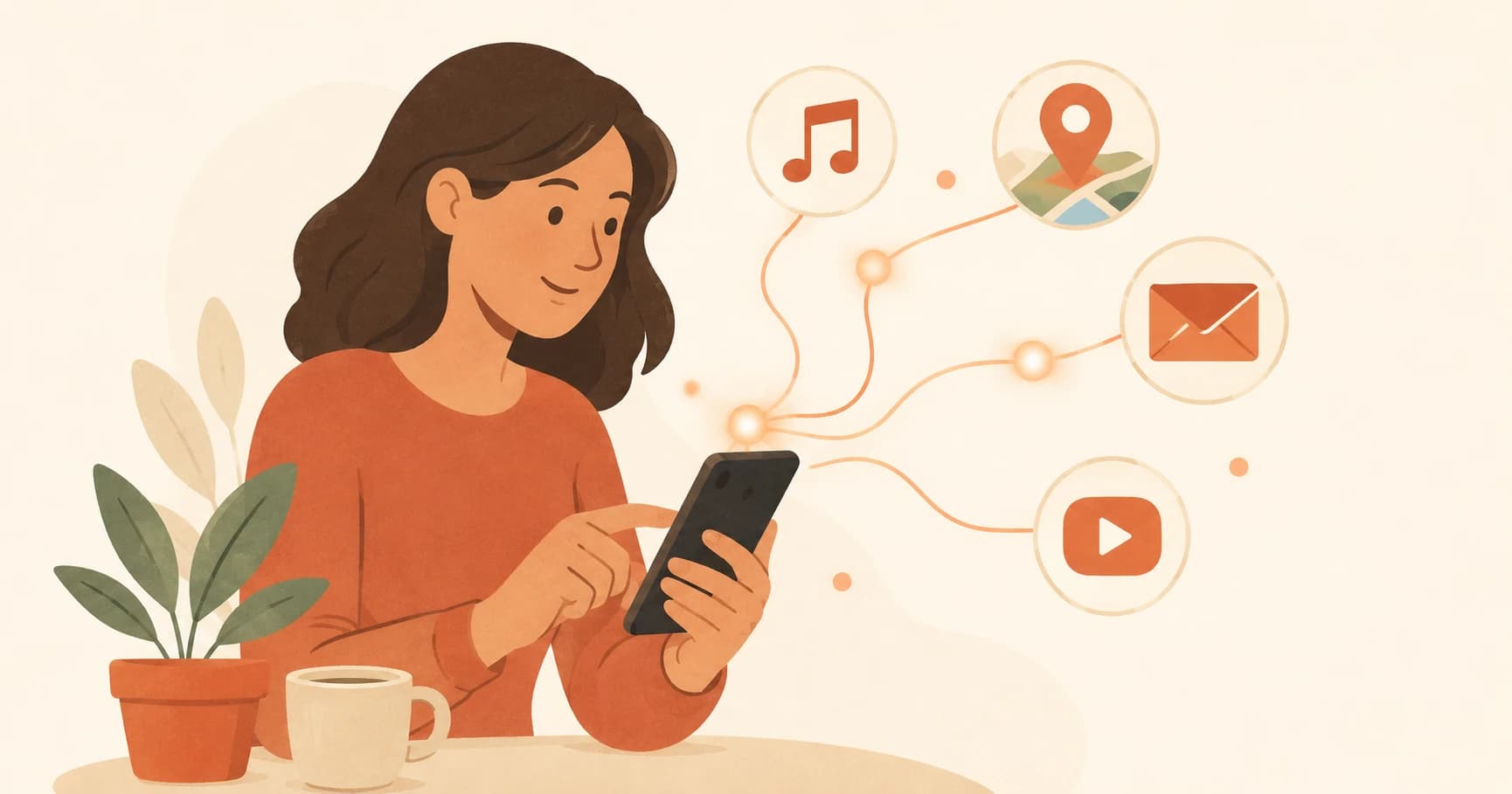
In this lesson, you'll learn what artificial intelligence actually is, stripped of the sci-fi noise and the hype. By the end, you'll be able to explain it to someone else in one clear, honest sentence.
Key Takeaways
- AI is pattern recognition at scale. It finds patterns in data and uses them to make predictions
- You've been using AI for years without realizing it: Spotify, Gmail, Google Maps, and your phone keyboard all run on it
- AI predicts; it does not understand. That one distinction explains both its power and its limits
- AI is not sentient, not magic, and not a thinking machine, and once you understand why, it becomes far less mysterious
You've been using AI longer than you think
Open Spotify and hit play. The next song it queues, that's AI. Start typing a reply in Gmail and watch it suggest how to finish your sentence, that's AI. Check Google Maps and see your ETA adjust as traffic ahead thickens, also AI.
None of this looks like the robots from movies. That's the first important thing to know about what is artificial intelligence for beginners: in practice, AI is not dramatic. It's behind the small, helpful decisions that your apps make dozens of times a day.
Your phone keyboard predicts the next word you're about to type. Netflix decides which thumbnail version of a show is most likely to get you to click. The spam filter that keeps junk out of your inbox has been classifying hundreds of emails a minute without you noticing. That's AI, working quietly, at scale, on pattern-based decisions that would take a human far too long to make manually. There are more of these than most people expect — the AI tools you already use every day walks through how each one actually makes its call.
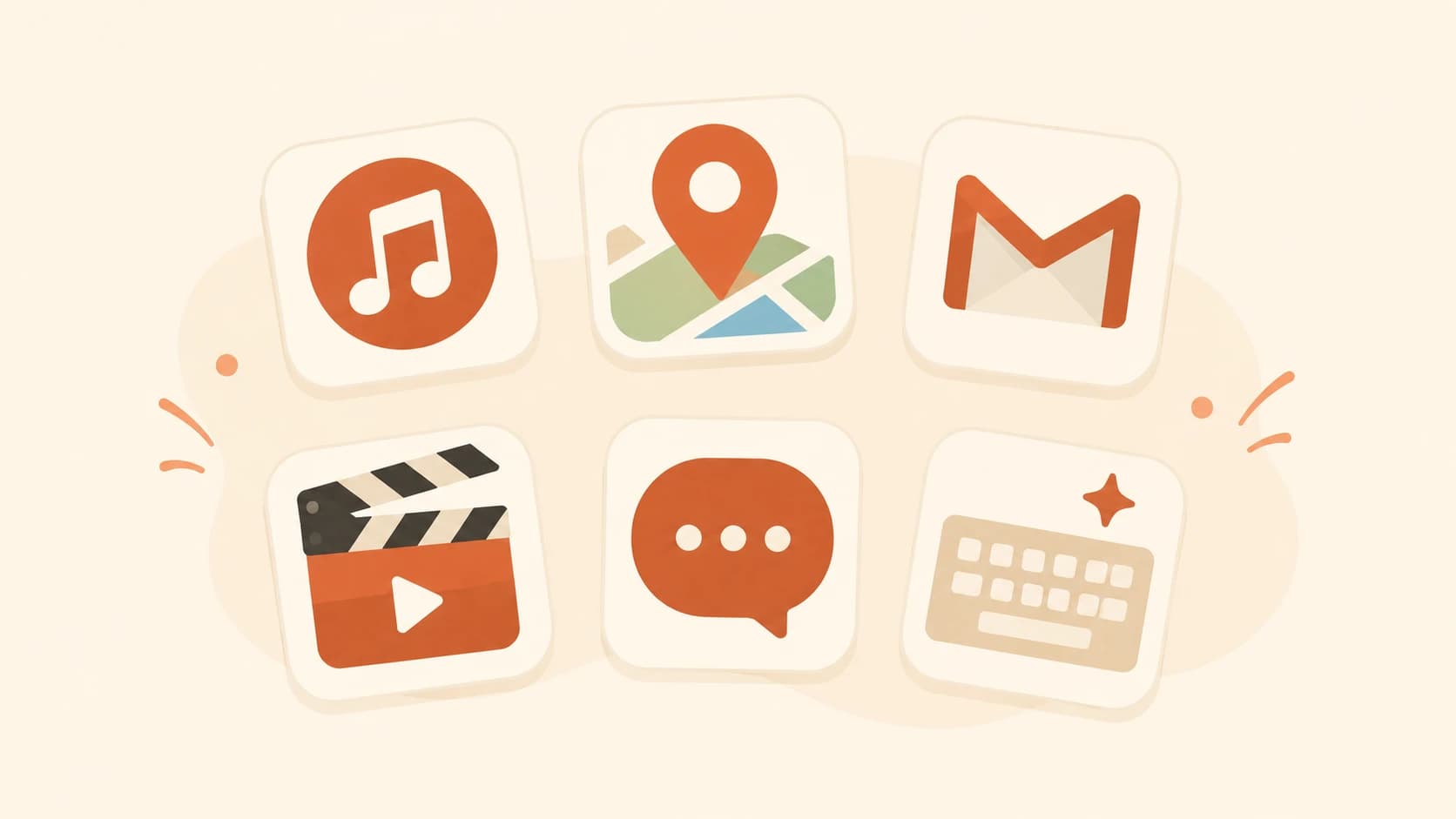
The reason it doesn't feel like AI is that the word carries baggage from science fiction, sentient machines, autonomous robots, systems with goals and feelings. Real AI, the kind running on your phone right now, is something different and considerably less dramatic. It's pattern recognition.
What AI actually is
Here's a clean, honest definition: artificial intelligence is the use of software to recognize patterns in data and use those patterns to make predictions.
That's it. Every application of AI, from a spam filter to a language model to a self-driving car, is some version of this loop:
The AI in Spotify has analyzed the listening habits of hundreds of millions of users and learned which songs tend to follow which other songs for people with similar taste. When it queues a song for you, it's making a prediction, not a choice, not a creative decision, not an act of taste. A very fast, very well-trained prediction.
The same is true for language models like Claude or ChatGPT, which are the AI tools you'll use most in this course. When you type a question and get back a response, the model is predicting, word by word, what text would be most likely to follow your input, based on patterns it learned from an enormous amount of written text. The output can feel thoughtful, even brilliant. The underlying mechanism is statistical prediction.
AI explained simply: give a system enough examples of a pattern, and it can learn to recognize and extend that pattern in new situations. That capability, applied at enormous scale, is what we call artificial intelligence.
What AI is not, and why that matters
AI does not understand. This is the most important honest thing to say at the start of an AI course.
When a language model answers a question, it is not looking up facts the way you would. It's generating text that pattern-matches to what a correct-sounding answer looks like, based on its training data. Usually that output is accurate and useful. Sometimes it's confidently, fluently wrong, a phenomenon called hallucination, because the model is optimizing for plausibility, not truth.
AI is also not sentient. It has no goals, no feelings, and no awareness of what it's doing. The systems that feel most human in conversation are extremely sophisticated pattern matchers. They are not minds.
This isn't a letdown — I'd argue it's the thing that makes AI approachable. An AI that predicts is a tool you can learn to use well. An AI that thinks would be something else entirely, and that's still firmly in the realm of science fiction.
Most of what goes wrong with AI, the biased outputs, the confident errors, the weird failures, makes more sense once you understand that the model is predicting, not reasoning. When you know that, you know how to use it better.
Curious where AI is ultimately heading? AI agents take the prediction engine and give it the ability to take real actions in the world — we cover that in detail later in this course.
Try it now: find the AI on your phone
Find your AI moment
Open any app on your phone — Spotify, YouTube, Gmail, Maps, whatever you use most. Find one moment where it's clearly making a prediction about you.
Drop it in the comments: what app, and what do you think it's predicting?
There's no wrong answer. The best ones are the ones that surprised you.
Done? You've completed Lesson 00.01.
This is the first lesson of the Getting Started path, a free, zero-experience-required course that takes you from AI curious to AI capable.
Frequently asked questions
FAQ